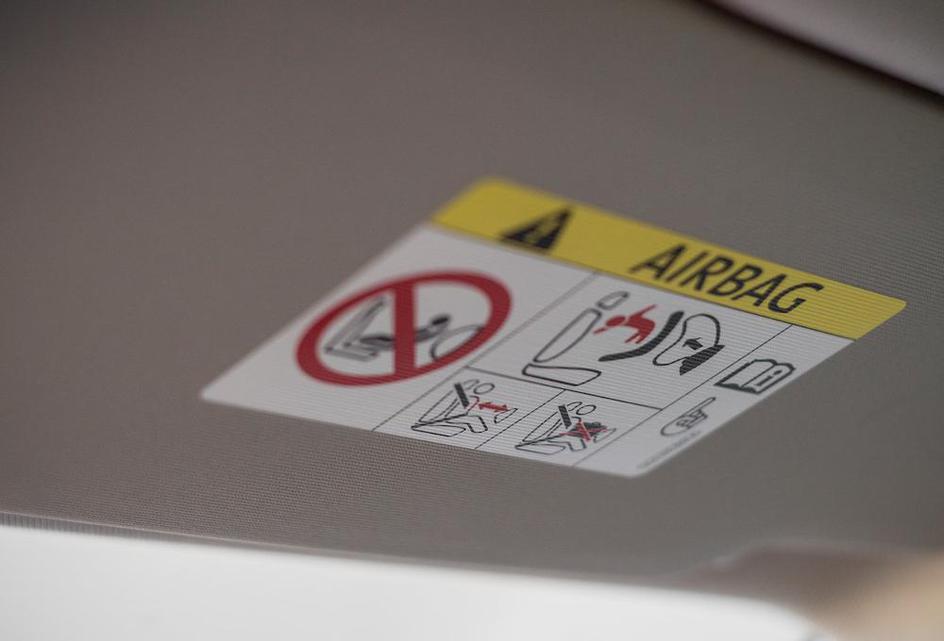
For decades, seatbelts were the only safety feature installed in a vehicle to protect passengers in the event of an accident, and it is the law in most countries for passengers to wear a seatbelt. We don’t really think about airbags until we need them and then they are, quite literally, in our faces. But how do airbags work? In this series, we look at the mechanics of an airbag, and when you should deactivate them.
What airbags do
In a nutshell, when a vehicle collides with something or stops suddenly, the passengers continue to move forward at the same speed as the vehicle was before it stopped. So, if you are going 60 miles an hour and your vehicle collides with something stationary, your vehicle will slow down, but for a while, you will still be going at 60 mph. This means that you will collide with the dashboard, windscreen, or, if you are a passenger in the back, the front seats. Seatbelts are designed to hold you back; they have a little give in them so you will be thrown forward and jerked to a sudden stop. Airbags are designed to slow down a passenger’s forward movement more gently than a seatbelt.
How airbags work
Airbags comprise of three main parts: the bag, the sensor and the inflation system. The bag is made of thin nylon and is concealed in the centre of the steering wheel or under panels in the dashboard, seats or doors. The sensors detect when there is a collision and activates at any force greater than that of hitting a solid, stationary object at more than 10-15 miles per hour. If the sensor detects such a force, it closes a circuit that causes the airbag’s inflation system to work. The inflation system involves causing a chemical reaction, which releases hot nitrogen gas. The gas instantly inflates the airbag, causing it to burst from its casing at around 200 mph – so fast, it feels as though the airbags are released the instant a collision happens.
Airbags mean that, instead of being thrown forward into a blank space, or colliding with a dashboard, wheel or seat, passengers meet the soft resistance of an inflated bag. The bag has tiny holes in it, which slowly deflate the bag (to prevent suffocation in the event the passenger is unconscious). A fine powder is released, too – this is corn starch, which helps to keep the nylon soft and pliable.
Whilst airbags undoubtedly save lives, you should still wear a seatbelt at all times. This is because airbags can only help you if you are hit front-on. If your vehicle is hit from the side, your seatbelt will be the best chance of limiting injury.
Air bags don’t come without risks, which drivers should be aware of. If you want to know more about airbag safety, or to check how many airbags your vehicle has, contact your local garage.